Does Federal Preclearance Make a Difference? Examining the Effects of Shelby on the Minority Voting Gap and Countermobilization

The 2013 Shelby decision suspended federal preclearance restrictions on changes to voting laws in several states with a history of racial or ethnic discrimination and disparities in voting. We analyze the impact of removing federal preclearance of state election reforms on minority voter turnout by estimating the triple difference in minority turnout versus white turnout […]
Project: Electoral Integrity and Ranked Choice Voting – An Experiment

This study will investigate how surprise changes in election results, delay, and ranked choice voting interact to shape perceptions of election integrity and fairness.
Partisanship and Voting Rule Trade-offs

This study evaluates the extent to which partisan differences about voting rules are rooted in disagreements about the relative importance of maximizing turnout versus preventing ineligible voters from casting ballots. Research Documents NOTE: This is an incomplete draft of work in progress; please do not cite without permission.
A Dynamic Cost of Voting Index: How Do State Election Administration Rules Impact Voter Turnout and the Integrity of Elections?
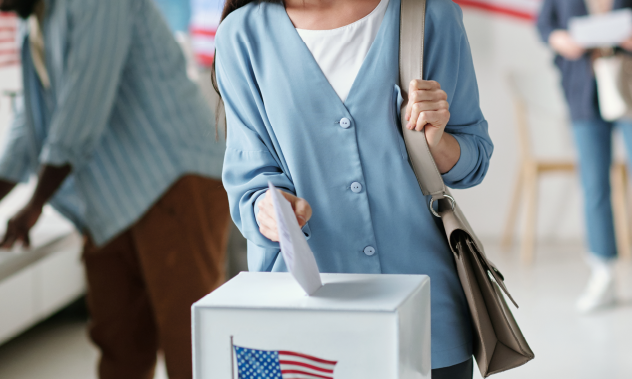
This study looks at a “cost-of-voting” (COVI) index based on state election administration laws and revises the COVI to introduce a time-consistent dynamic index or DCOVI of the cost of voting in states. Research Documents NOTE: This is an incomplete draft of work in progress; please do not cite without permission.
Does Voter ID Improve Public Confidence in the Integrity of Elections?

State voter identification laws involve a potential tradeoff between the ease of voting and public perceptions of the integrity of elections. While several prior studies have examined the effects of voter ID laws on turnout, relatively few have investigated the effects of such laws on public confidence in the integrity of elections. These earlier efforts […]
Reminder: Election Denialism is Highly Partisan, So is Election Fraud Denialism.
Drawing on survey data from the 2024 election cycle, this research explores how partisan dynamics shape beliefs about election fraud and integrity, explaining how both “election denialism” and “election fraud denialism” frequently reflect motivated reasoning.
What Election Fraud Looks Like
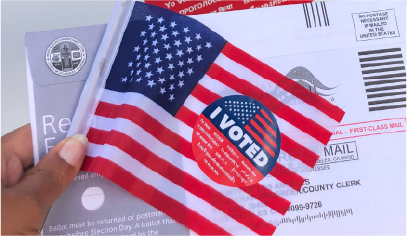
This research reviews much of the recent empirical research on voting and election fraud, making several observations. First, views on election fraud are intensely partisan, and conditioned on winning and losing…
Ballot Access and Ballot Accuracy

This study examines parallels and contrasts between the Bridgeport, Connecticut mayoral election scandal of 2023 and the 2018 North Carolina 9th Congressional District race, both marred by illegal ballot manipulation…